
There are quite a few "demonstrations of Ki" available on YouTube which I personally find embarrassing in the extreme. I won't link to them because I don't want to give them any more publicity than they already have. Suffice to say, that some people's understanding of Ki in Aikido is very different from mine. It was a joy, then, to discover this short, simple, down-to-earth explanation of Ki Aikido by Kashiwaya Sensei, Chief Instructor of the Ki Society in the USA.
Kashiwaya Sensei is not only a very skilled practitioner of Aikido but he also has a rare quality of being able to convey his joy and enthusiasm for the art. He gives a simple, level-headed explanation of the four principles of Ki Aikido in this video. He also makes what I consider to be a crucial point - that Aikido techniques are not useful to most people once they leave the dojo. But the core teachings of Ki Aikido ("mind/body coordination") are valuable in daily life. Anyway, here's the video. I hope you find it of interest.
Showing posts with label ki. Show all posts
Showing posts with label ki. Show all posts
Tuesday, 30 July 2013

Saturday, 18 August 2012
Kokyu in Aikido – "Breath power"? Really…?
Kokyu ("呼吸") is a much used word in Aikido. Not only does the term occur in one of the fundamental throws, Kokyu-nage, but it is also used in the exercise, Kokyu-dosa (which, by tradition, should be practised at the end of every Aikido session) and Kokyu-ho (various exercises often involving movement while being held).
Kokyu is the Japanese word for ‘breath’ and many books translate ‘Kokyu-nage’ as ‘the breath throw’ – which seems to suggest that you should be doing some pretty nifty breathing while throwing. It is certainly the case that some people may find ‘kokyu’ exercises, such as kokyu-dosa, easier to do if they breathe in harmony with the technique. Even so, I have to admit that I have never really felt that kokyu-nage involves more or less ‘breath power’ than any other aikido throw.
In Koichi Tohei’s classic book "Aikido, The Co-ordination of Mind and Body for Self-Defence", Kokyu is defined as “movement of your Ki or the movement of your body following Ki.” Tohei says that “The arts of Aikido are concerned not only with physical matters but also with Ki, Kokyu Ho is the way that leads others by Kokyu, and Kokyu Nage is the art of throwing others by Kokyu.”
The one thing you may notice in this description is the complete absence of the word “breath”!
Gozo Shioda, founder of the Yoshinkan school of Aikido describes kokyu power as “focused power” (you can read a free sample chapter on Kokyu from Shioda’s book, ‘Aikido Shugyo: Harmony In Confrontation’ here: http://www.shindokanbooks.com/shugyo.shtml).
To help clarify this confusion, I asked a Japanese friend for some assistance in making sense of the Japanese meaning of the word, kokyu. She tells me that “Kokyu” has four main meanings, the first of which is, indeed, ‘breath’. But it can also mean ‘an art or knack’, ‘the gist of something’ or a ‘rhythm, tone or tune’ and that it may suggest a sense of harmony.
Thinking of kokyu-nage as a throw that uses ‘focused power’ or harmony with Ki makes much more sense to me than its rather prosaically literal translation of ‘breath throw’. This is, after all, what we try to do throughout our practice of Aikido.
Wednesday, 30 May 2012
Ki in Aikido - what is it?
“Aikido” means “The way of harmonizing with Ki”. OK, fair enough. But what, exactly is Ki?
In different books on Aikido, you will find a number of different descriptions of Ki. In his book, The Spirit of Aikido, Kisshomaru Ueshiba (the founder’s son) describes Ki as “The world-forming energy which also lies at the core of each human being”. In Ki In Daily Life, Koichi Tohei (founder of Ki Aikido) describes ki as “the real substance of the universe”. In their classic text on Aikido, Aikido and The Dynamic Sphere, Adele Westbrook and Oscar Ratti describe ki as “inner energy” and they go on to state: “No ki – no Aikido.”
So, in short, what are we to make of this? Ki would seem to be some sort of energy that is both inside you and beyond you? And it is fundamental to Aikido. Which may make you wonder whether you need to be a physicist or a philosopher to understand ki. And, once you’ve understood it, you then have to find out how to use it in Aikido.
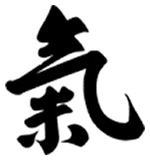 If this is confusing, don’t panic! The good news is that you don’t need to study any esoteric arts to understand how to put the ki into aikido. For some people ki may have a spiritual or mystical dimension – and that’s fine. For other people, ki is no more than a convenient shorthand term for a way of thinking and acting that has more to do with psychology and physics than parapsychology and metaphysics – and that’s fine too.
In Ki Aikido we talk a great deal about “extending Ki”. I like the description that Koretoshu Maruyama gives in his book, Aikido With Ki: “To extend ki is to have a positive spirit.” In my view, the simplest explanations are often the best and this, it seems to me, is a perfect summary of ki extension – a positive spirit. When you go to embrace someone you love you naturally extend ki. You don’t have to think about how to do it; it just happens.
In Ki Aikido, we have an exercise called ‘unbendable arm’ in which we learn to extend an arm and, even though we keep the arm loose and relaxed, it is very hard for someone to use force to bend the arm at the elbow. Beginners may find this exercise very hard to master. They constantly want to use strength, and tension, to ‘fake’ unbendable arm. To explain the feeling we are looking for, I sometimes ask a student to walk towards me and shake my hand. Assuming they are happy to do that (if they found me intimidating, the exercise would be counter-productive!) they generally find that the mere action of shaking my hand automatically gives them unbendable arm. That’s because they are naturally extending a positive feeling; it is no longer a difficult ‘test’; it is something that is easy to do without making a conscious effort.
That is a fundamental feature of ki extension. It isn’t a clever martial art technique at all. It is something that everyone does naturally. The secret is to be able to put yourself into a frame of mind in which that positive feeling is natural all the time – even when you are practising Aikido at high speed. It’s not something you turn on and off – it’s just there.
When students first get the feeling for ‘extending ki’, they are often surprised at how easy and natural it is. Prior to getting that feeling they often assume that is something that is incredibly difficult to achieve and not at all natural. But even those of us who have practised Aikido for a long time may sometimes lose that feeling: we allow ourselves to become tense, to try to do something with force rather than with a positive spirit. That is one of the reasons for all the many Ki development exercises we practise in Ki Aikido. Sometimes “doing what comes naturally” can be surprisingly difficult!
In different books on Aikido, you will find a number of different descriptions of Ki. In his book, The Spirit of Aikido, Kisshomaru Ueshiba (the founder’s son) describes Ki as “The world-forming energy which also lies at the core of each human being”. In Ki In Daily Life, Koichi Tohei (founder of Ki Aikido) describes ki as “the real substance of the universe”. In their classic text on Aikido, Aikido and The Dynamic Sphere, Adele Westbrook and Oscar Ratti describe ki as “inner energy” and they go on to state: “No ki – no Aikido.”
So, in short, what are we to make of this? Ki would seem to be some sort of energy that is both inside you and beyond you? And it is fundamental to Aikido. Which may make you wonder whether you need to be a physicist or a philosopher to understand ki. And, once you’ve understood it, you then have to find out how to use it in Aikido.
In Ki Aikido we talk a great deal about “extending Ki”. I like the description that Koretoshu Maruyama gives in his book, Aikido With Ki: “To extend ki is to have a positive spirit.” In my view, the simplest explanations are often the best and this, it seems to me, is a perfect summary of ki extension – a positive spirit. When you go to embrace someone you love you naturally extend ki. You don’t have to think about how to do it; it just happens.
In Ki Aikido, we have an exercise called ‘unbendable arm’ in which we learn to extend an arm and, even though we keep the arm loose and relaxed, it is very hard for someone to use force to bend the arm at the elbow. Beginners may find this exercise very hard to master. They constantly want to use strength, and tension, to ‘fake’ unbendable arm. To explain the feeling we are looking for, I sometimes ask a student to walk towards me and shake my hand. Assuming they are happy to do that (if they found me intimidating, the exercise would be counter-productive!) they generally find that the mere action of shaking my hand automatically gives them unbendable arm. That’s because they are naturally extending a positive feeling; it is no longer a difficult ‘test’; it is something that is easy to do without making a conscious effort.
That is a fundamental feature of ki extension. It isn’t a clever martial art technique at all. It is something that everyone does naturally. The secret is to be able to put yourself into a frame of mind in which that positive feeling is natural all the time – even when you are practising Aikido at high speed. It’s not something you turn on and off – it’s just there.
When students first get the feeling for ‘extending ki’, they are often surprised at how easy and natural it is. Prior to getting that feeling they often assume that is something that is incredibly difficult to achieve and not at all natural. But even those of us who have practised Aikido for a long time may sometimes lose that feeling: we allow ourselves to become tense, to try to do something with force rather than with a positive spirit. That is one of the reasons for all the many Ki development exercises we practise in Ki Aikido. Sometimes “doing what comes naturally” can be surprisingly difficult!
Subscribe to:
Posts (Atom)